How accident and title history should affect a price comparison
Assess the scope, documentation, repair quality, and unresolved risk of a history event without inventing a standard damage discount.
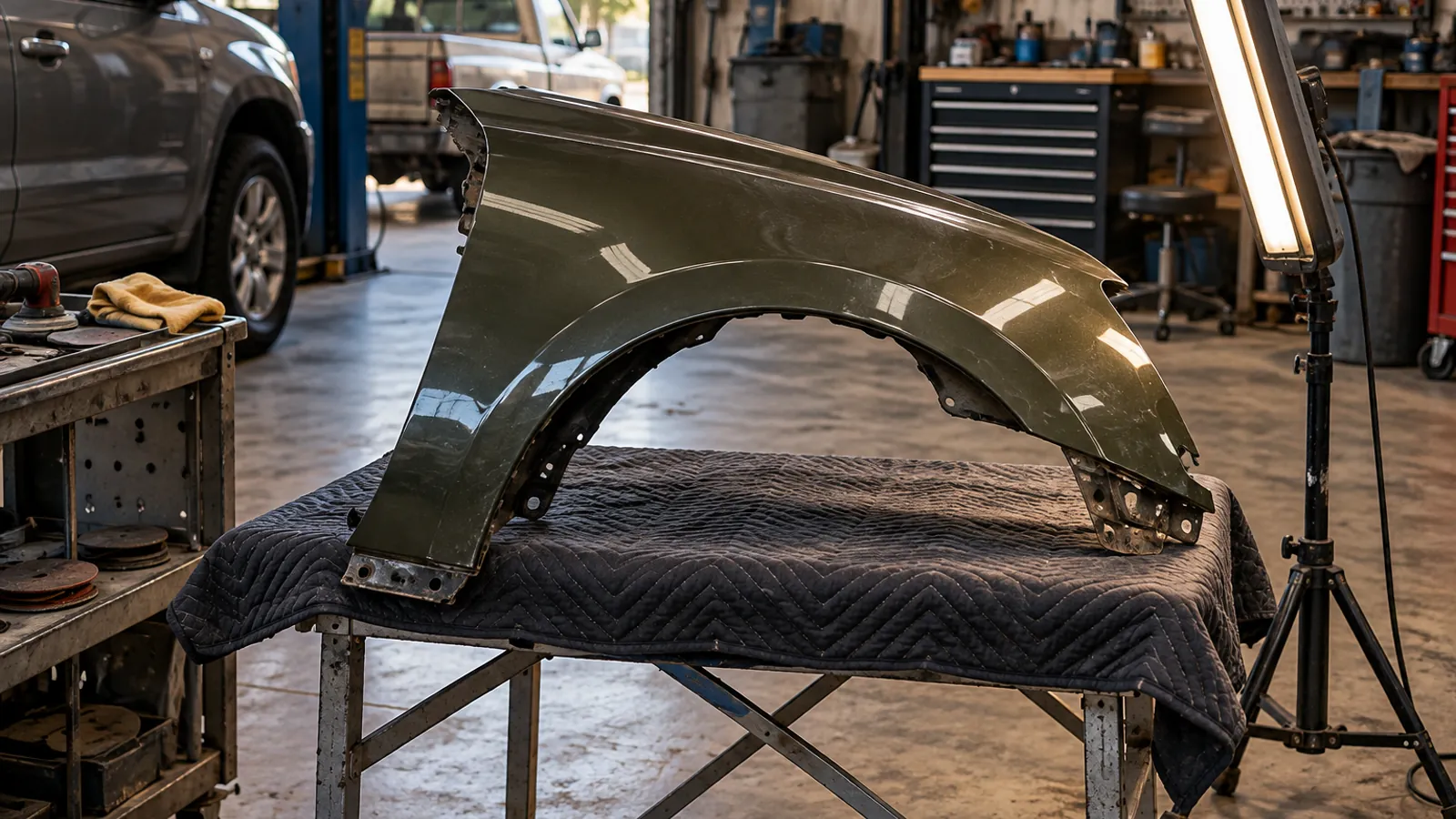
There is no reliable universal accident-history discount for every used car. First establish what is documented, what remains unknown, and whether the car is suitable to consider at all. A minor cosmetic event, a structural repair, and a branded title are different questions. Price research comes after identity, ownership, and safety concerns have been investigated, not before.
Separate an event from a conclusion
Read the actual report wording, event date, reporting source when shown, and vehicle identifier. Do not turn an event label into a detailed crash reconstruction. A record may be incomplete, delayed, corrected, or expressed differently by another provider. Request repair invoices, photographs if available, and any relevant inspection documentation from the seller. Check that the materials relate to the same VIN and event.
Equally, a report without a damage entry does not establish that no damage occurred. Some events never reach a database. Inspect the car independently and describe the evidence accurately: no event reported by this source is narrower than accident-free. If reports conflict, preserve both and ask the relevant providers about their correction process. Do not quietly choose the version that makes the purchase easier to justify.
Distinguish title brands from repair history
Title brands are official record issues governed by state systems and definitions. A repair invoice or commercial report description is a different category of information. Ask the relevant motor vehicle agency what a recorded brand means and what the current transfer requirements are. A car’s appearance does not remove a recorded history, and a registration-related inspection should not be assumed to guarantee every aspect of mechanical condition.
Before considering a branded-title car, confirm whether your lender and insurer will accept that exact vehicle and on what terms. Get the answer using the VIN. Do not assume a quoted price or general preapproval applies to every title status. If coverage, financing, registration, or future resale matters to your plan, unresolved answers can make the car unsuitable regardless of the apparent discount.
Commission an inspection suited to the concern
An ordinary pre-purchase inspection may not include a specialized structural assessment. Explain the known event before booking, ask what the inspector can assess, and seek an appropriate specialist when necessary. Ask for written observations and explicit limits. Repair quality, corrosion, alignment concerns, warning systems, and water exposure may need different expertise. A price estimate cannot fill those evidence gaps.
| Question | Evidence | If unresolved |
|---|---|---|
| What was reported? | Full report and event wording | Avoid making a specific damage claim |
| What was repaired? | VIN-linked invoices and records | Request further documentation |
| What is the current condition? | Suitable independent assessment | Pause the decision |
| What is the title status? | Current state record and brand history | Consult the motor vehicle agency |
| Can you insure and finance it? | VIN-specific written confirmation | Reconsider affordability and suitability |
Build a comparison with explicit limits
Suppose a no-reported-damage comparison group has illustrative asking prices around $20,000, while a candidate with a documented repair is advertised at $17,500. The $2,500 gap is 12.5% of $20,000. That is arithmetic describing this example, not a recommended discount. It does not establish whether the gap compensates for the specific repair, uncertainty, financing differences, or future buyer preferences.
Look for alternatives with a similar documented history and current condition, while recognizing that those matches may be scarce. Show any inspection and additional ownership costs separately. If the car still has unresolved safety or title questions, do not convert them into a larger discount and proceed. A lower price is not evidence that the uncertainty has been resolved. Some candidates should be excluded from your shortlist rather than repriced.
Decide before negotiating
Write down the conditions you require: acceptable ownership documentation, an inspection scope appropriate to the history, insurer approval, lender acceptance if relevant, and a budget for verified work. Give yourself permission to reject a vehicle that does not meet them. The seller’s deadline does not make a missing document less important. Keep all disclosures and promises in the final written agreement if you proceed.
Use the history-report guide to read the timeline, title-brand guide to identify questions for the state, and value-range guide for the broader comparison. Mileage and condition explains how to keep observed work separate from assumptions. Seek professional advice when a disputed title, alleged concealment, or contract problem affects your rights; this guide does not determine legal liability.
Keep a separate note about what would make the vehicle difficult for you to sell later. You cannot forecast a future buyer’s offer, but you can avoid assuming that every disclosure will stop mattering after your purchase. Retain repair and inspection records if you proceed, and describe the history accurately when you eventually sell. Documentation improves transparency; it does not guarantee a particular resale price.
Continue in this section
- How to build a defensible used car price range
- Mileage versus condition: what should change your offer?
- From asking price to a written used car offer
FAQ
Does repaired damage always make a car unsafe?
That conclusion cannot be drawn from the label alone. The event, repair, and current condition need appropriate assessment. Do not assume either safety or danger solely from a summary line; investigate with a qualified independent professional.
Can a clean title prove there was no major damage?
No. Title status and damage history are different evidence categories. A car may have repair history without the brand you expect. Review multiple sources and inspect the vehicle rather than treating one label as complete assurance.
Is a fixed percentage discount a good starting point?
It can create false confidence. Use actual matched alternatives and evidence about the particular car. If close matches do not exist, state the uncertainty rather than presenting a precise percentage as an established market rule.
Sources
- DOJ NMVTIS consumer report access — title-history research and approved providers.
- FTC used car guidance — the distinction between a report and an inspection.