How to investigate a mileage discrepancy before buying
Build a dated mileage timeline, check units and original records, and handle unresolved conflicts without diagnosing fraud from one entry.
A mileage discrepancy deserves investigation before you rely on the odometer for price or maintenance decisions. Compare the actual display with a dated timeline of records, check units and vehicle identity, and ask the original source about conflicting entries. A mismatch is not automatically proof of intentional tampering, but an unsupported explanation is not enough to establish the lower reading as correct.
Gather the records without changing the story
Record the displayed odometer, date, and unit. Match the VIN on title information, history reports, and service invoices. Keep copies of the original records you are entitled to retain. Do not rewrite an apparent error in your working sheet as though it had been officially corrected. Preserve the conflicting version and add a separate note describing what has been verified and by whom.
Put events in chronological order using the event date rather than the day you downloaded a report. Include service visits, inspections where available, title events, and other dated mileage records. A long gap is an absence of information, not a measured mileage increase or proof that the vehicle was stored. Keep unknowns visible and avoid filling them with an average annual driving figure presented as the actual history.
Check simple explanations carefully
Look for miles versus kilometers, a transposed digit, a wrong event date, a record attached to another VIN, or documented instrument replacement. These are questions to investigate, not automatic excuses. Ask for original supporting records and the provider’s correction procedure. If a unit conversion is relevant, document the units explicitly and explain the calculation rather than comparing unlabeled numbers.
For illustration, a timeline showing 48,000 miles and later 47,000 miles has a 1,000-mile decrease. That arithmetic identifies the conflict; it does not identify the cause. A separate entry of 80,000 kilometers should not be compared as 80,000 miles. Do not assume every inconsistency is a unit issue, and do not accept an oral explanation without checking whether the original records support it.
Compare condition and maintenance without pretending they prove mileage
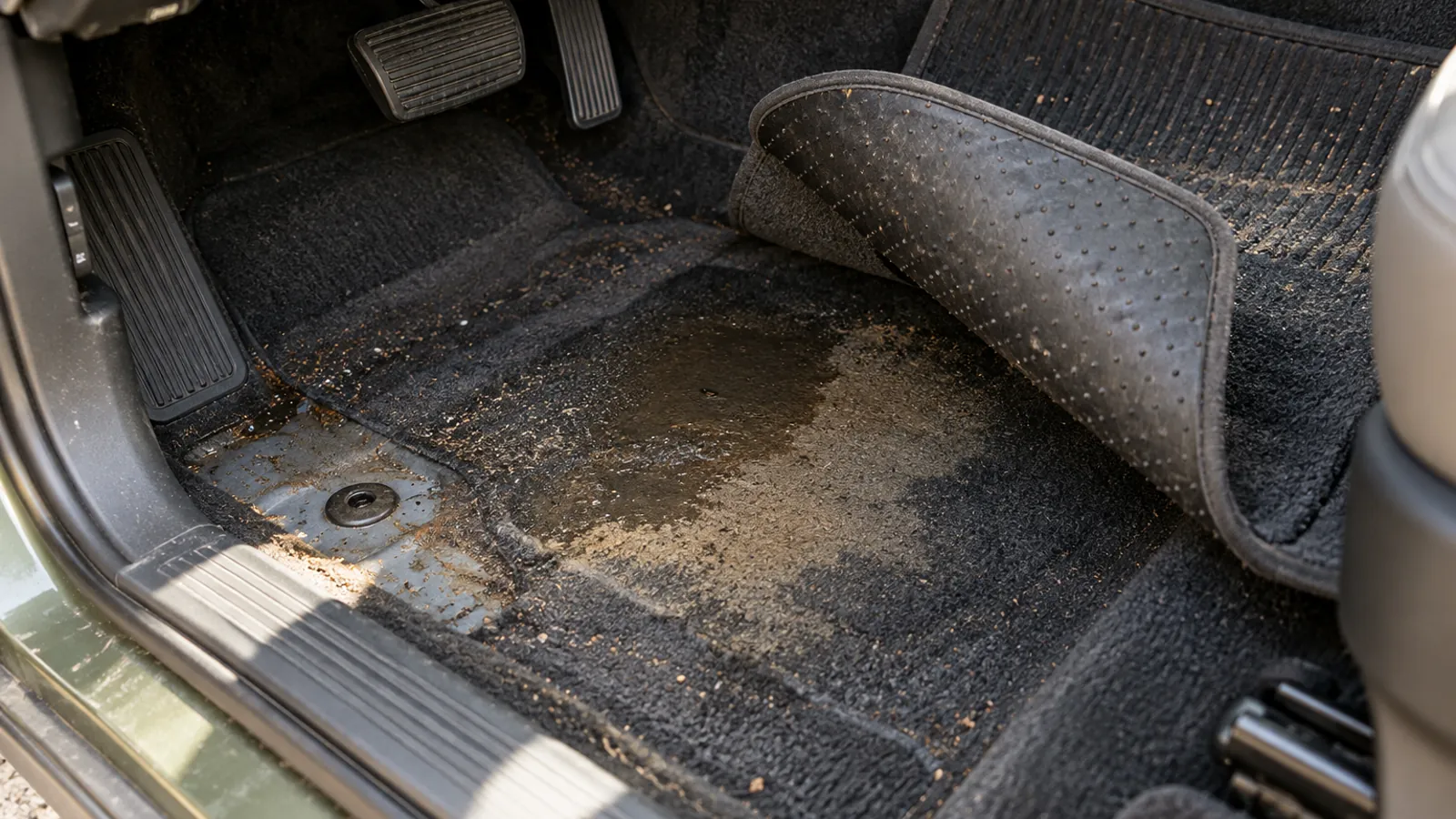
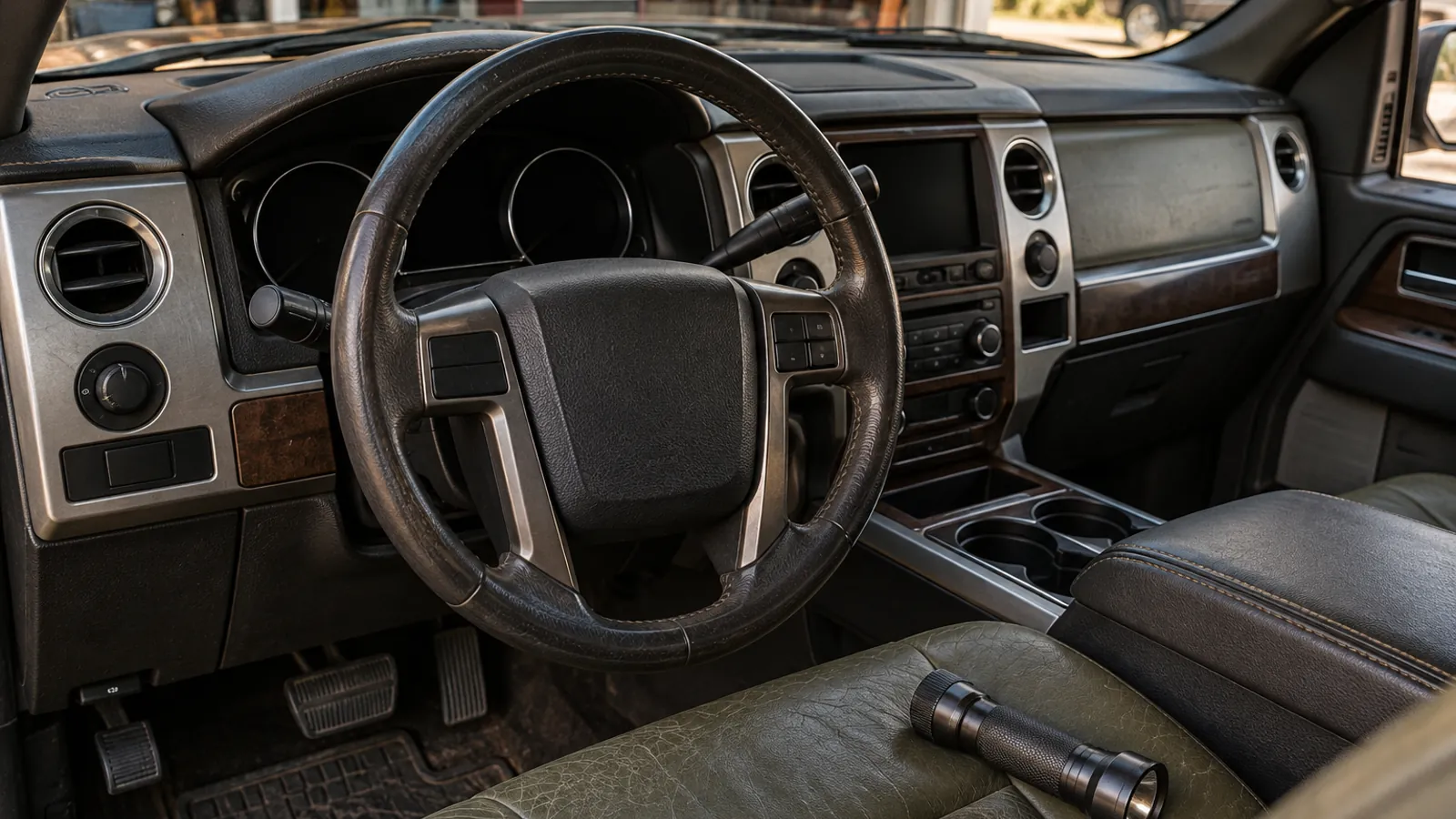
Visible wear can suggest questions, but it cannot precisely measure distance traveled. Pedals, seats, steering wheels, and tires can be replaced or wear differently under different use. Ask an independent inspector about inconsistent observations and what else should be checked. A clean interior is not a reliable odometer verification method, and a worn seat does not by itself prove rollback.
| Evidence | Useful question | Limit |
|---|---|---|
| Odometer display | What does it show now? | Does not establish earlier history |
| Dated invoice | What was recorded at that visit? | Can contain an error or need VIN verification |
| Title entry | What was officially reported? | Must be read with applicable notation |
| History timeline | Where do records conflict? | Coverage and source timing can vary |
| Physical condition | What deserves investigation? | Cannot calculate exact true mileage |
Keep maintenance decisions separate from mileage confidence. If required work cannot be verified, ask a mechanic about an appropriate plan rather than assuming it was completed at the expected interval.
Ask the right parties for clarification
The report provider can explain its entry and correction process. The original servicing business may be able to clarify an invoice, subject to access and privacy limits. The motor vehicle agency can explain title odometer notation and applicable disclosure requirements. A seller can provide documents, but should not be the sole authority on a disputed record that directly affects the sale price.
If the seller says a replacement cluster explains the reading, ask for documentation identifying the vehicle, date, readings, and work performed. Then ask the relevant agency or a qualified professional how the situation should be represented in the transfer. Do not assume a replacement makes any displayed number legally or practically equivalent to verified total mileage. Rules and records matter to your transaction.
Keep unresolved mileage out of a confident valuation
Until a material conflict is resolved, do not present the car as definitely having the most favorable reading. Look for alternatives with clearer records or decide whether to withdraw. A discount does not reconstruct the missing history. If you suspect intentional misrepresentation, retain evidence, avoid accusing someone publicly without a basis, and use the appropriate agency or legal advice to understand reporting options and your rights.
Read the report guide to organize the timeline, mileage and condition for price comparisons, and title brands for official-record issues. The official-source guide distinguishes complaint, title, and safety resources. Bring a concise question list to the inspector; asking for a true-mileage certificate from a brief mechanical inspection would exceed what the observations can establish.
When requesting clarification, send a focused question that identifies the VIN, event date, reading, and apparent conflict. Avoid submitting unnecessary personal information from unrelated pages. Keep the provider’s response with the original record so the reasoning remains traceable. A revised report should be checked against the actual correction described rather than treated as automatically resolving every other gap in the vehicle’s history.
Continue in this section
- How to read a used car history report without overreading it
- Clean, salvage, and rebuilt titles: questions to resolve first
- Official sources for a used car decision in 2026
FAQ
Can one wrong service entry mean fraud?
It can identify a conflict, but it does not establish intent or cause on its own. Seek original records and clarification. If the discrepancy remains material and unresolved, you can decline the car without making a definitive allegation.
Does wear prove the actual mileage?
No. It can prompt questions but is affected by use, materials, repairs, and replacement parts. Use it alongside dated records and professional observations, not as an exact mileage calculation.
What if the provider agrees to investigate after I buy?
An investigation is not a confirmed correction. Consider waiting until the result is documented before relying on the favorable reading. Read any purchase or deposit terms carefully and seek advice if your rights depend on the outcome.
Sources
- NHTSA odometer fraud — mileage checks and reporting information.
- DOJ NMVTIS consumer information — title-history research context.